
The distance between Prague and Budapest is 530 kilometres. By car on the motorway it takes about five hours. By train, with a change in Vienna or Bratislava, it takes seven or eight. By direct bus, also around seven.
That distance is the first thing to understand, because it settles the main question immediately: this is not a day trip. People occasionally ask whether you can visit Budapest from Prague in a single day. You can reach it, technically — but you would spend more time in transit than in the city, and you would arrive having used ten hours on vehicles instead of spending ten hours in one of the most extraordinary cities in Central Europe.
Budapest deserves more than a rushed afternoon. So does the road between Prague and Budapest — because that road passes through Vienna.

Why Prague, Vienna and Budapest Are One Route, Not Three Separate Trips
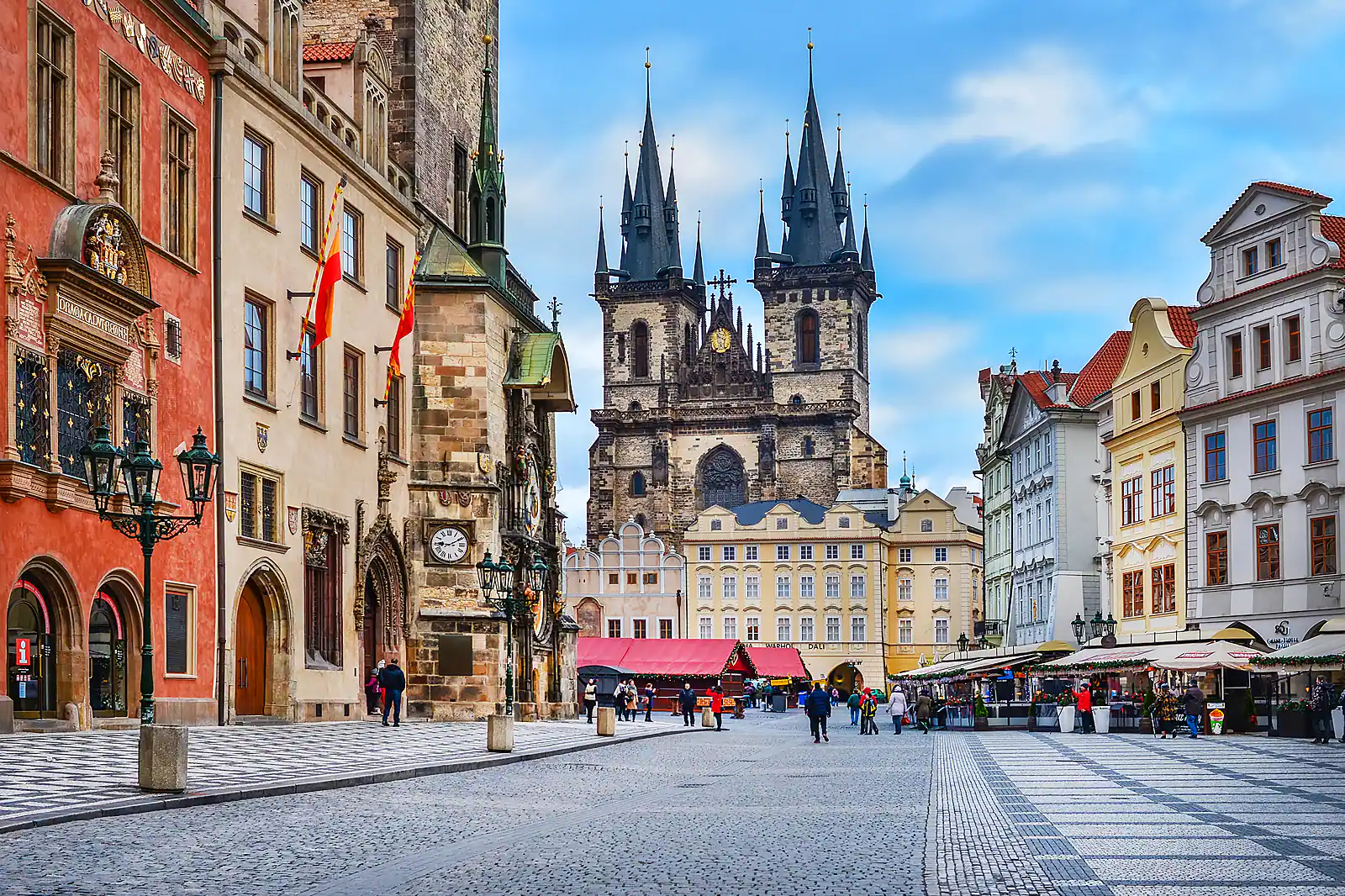
Look at a map of Central Europe. Prague, Vienna, and Budapest form a near-perfect triangle: three capitals, each around 300–350 kilometres from the others, each genuinely worth several days. Most travellers visit one. Some visit two. People who travel all three as a single journey tend to come back talking about it for years.
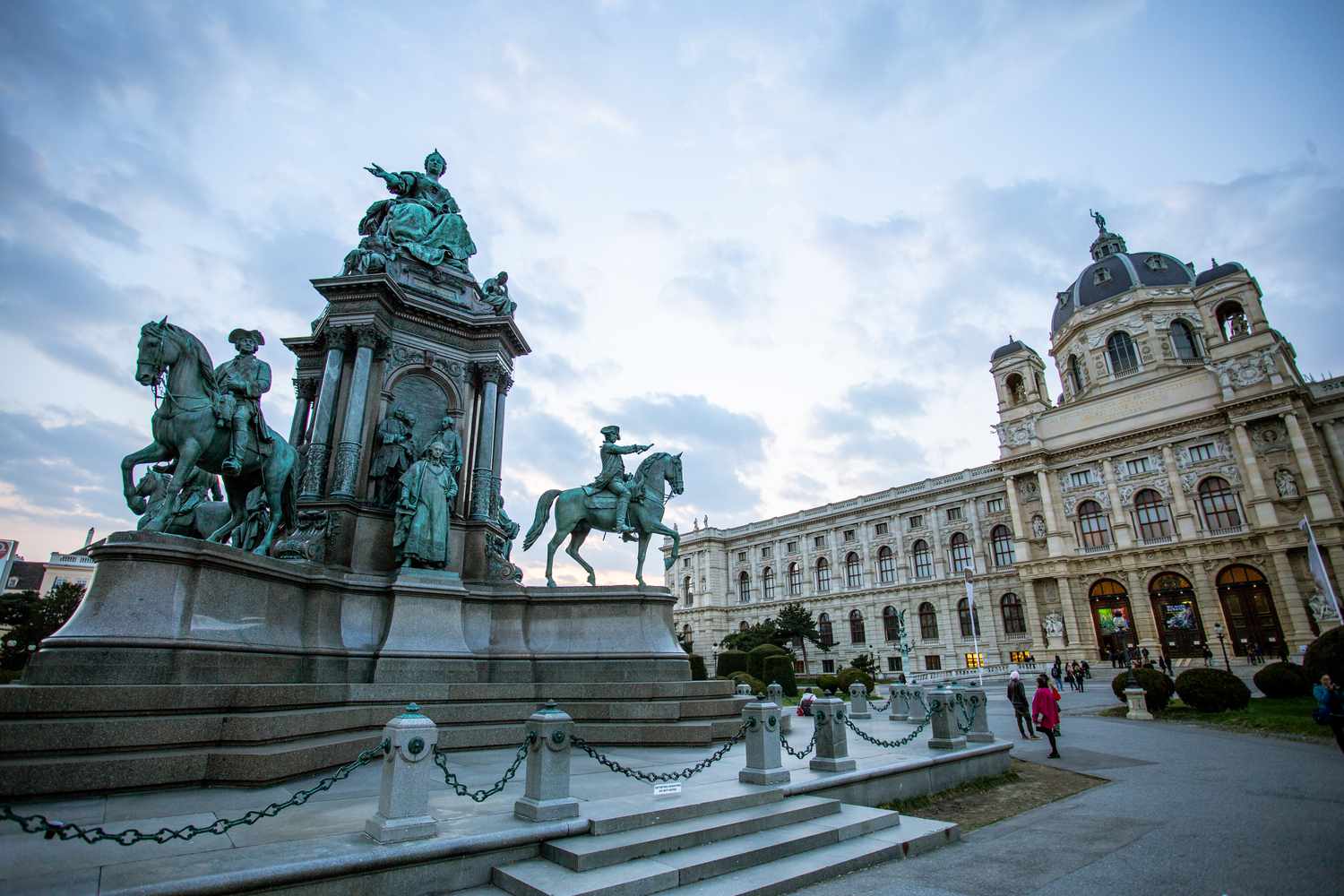
Vienna sits almost exactly between Prague and Budapest on the motorway south. Adding a day in Vienna to a Prague-to-Budapest journey adds about forty minutes of driving and one of the great cities of Europe. The architecture is different from both — heavier, more imperial, more deliberately monumental. The Kunsthistorisches Museum, the Belvedere, the Naschmarkt, the Ringstrasse: all within walking distance of each other, and none of it resembling anything you will have seen in Prague.
This is the logic behind our Prague · Vienna · Budapest private tour — three cities, one coherent journey, with a private guide and private car throughout.
What You Will See in Budapest
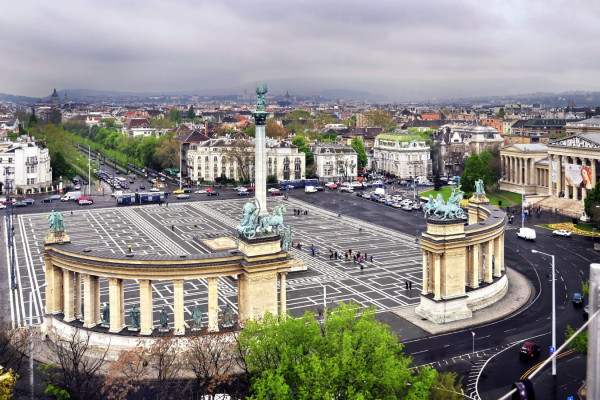
Budapest was three cities until 1873: Óbuda, Buda, and Pest, divided by the Danube and united into a single capital by decree. Buda and Pest are still very different from each other — one hilly and historic, the other flat, dense, and energetic — and both are worth your time.
Buda: The Castle District and the Hills
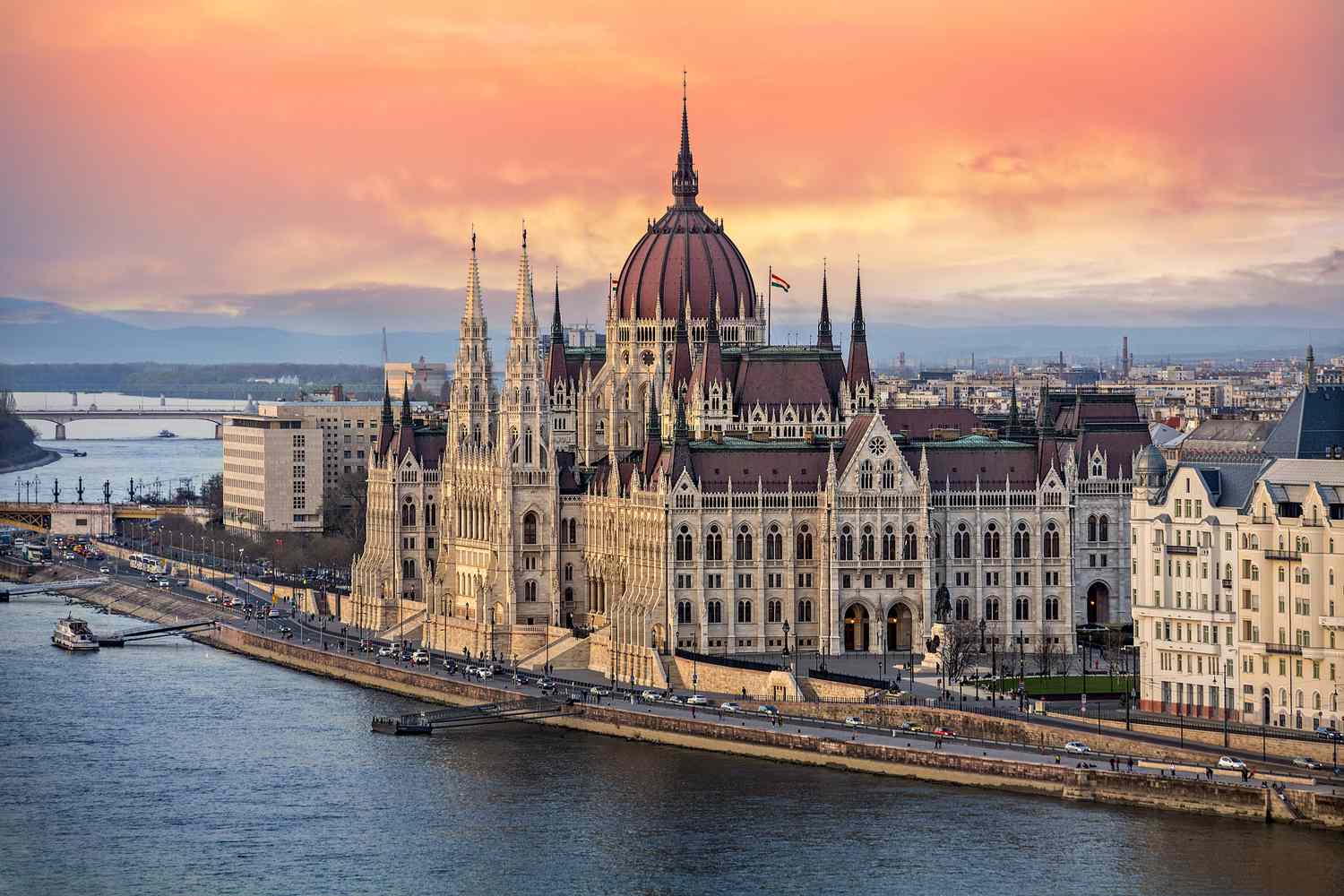
Buda Castle and the Royal Palace occupy the long plateau above the river. The complex is enormous — built and rebuilt across several centuries, damaged heavily in the Second World War, and restored in stages after 1945. From the castle terrace, the view across the Danube to the Parliament building on the Pest bank is the defining image of Budapest: two shores, the river between them, the bridges connecting them in a line stretching north and south.
Fisherman's Bastion is the most distinctive structure in the castle district — a series of white stone turrets and terraces built in the early 20th century as a viewing platform over the Danube. It looks considerably older than it is, which was entirely the point. The views from its ramparts are genuinely spectacular: the Parliament, both shores, the Chain Bridge, the Pest skyline. It is crowded in summer and remarkable at any time of year.
Matthias Church, immediately next to Fisherman's Bastion, has had several lives. It was a Catholic coronation church, then an Ottoman mosque for 150 years, then a Catholic church again. The geometric patterned tiles on the roof are 19th-century, but they look right. The interior is richly painted and unlike anything else in the region — closer to the patterned surfaces of an Istanbul mosque than to the whitewashed Gothic interiors more common in Central Europe.
Pest: Parliament, Market, and the Ruin Bars
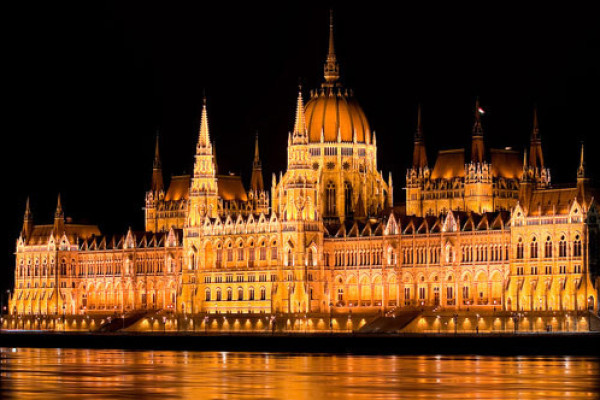
The Hungarian Parliament Building is one of the largest parliament buildings in the world and the defining landmark of Budapest from the water. It sits on the Pest bank directly facing the castle, its neo-Gothic spires symmetrical along the riverfront. Interior tours are available — the central dome, the staircase, and the room where the Crown of Saint Stephen is displayed are all accessible. But the most powerful impression of the building is simply standing opposite it on the Buda side at dusk, when the stone turns gold and the lights come on along the river.
The Great Market Hall is Budapest's largest covered market — a vast 19th-century iron and glass structure a few minutes from the river. The ground floor sells paprika, salami, pickles, and produce. The upper gallery has food stalls and tourist goods. It is a functioning market, not a staged attraction, which gives it a different quality: locals shop here alongside visitors, and the atmosphere reflects that.
St. Stephen's Basilica, in the heart of Pest, is the largest church in Hungary and one of the more beautiful religious interiors in Central Europe — a classical dome, fine mosaics, and a panoramic view from the cupola that takes in the whole of the city. The relic of Saint Stephen's right hand, the founding king of Hungary, has been kept here since the 18th century.
The Jewish Quarter and the ruin bars occupy a grid of streets in central Pest that was the historic Jewish district of Budapest. Much of it was destroyed during the Second World War and remained derelict for decades. The ruin bars — bars and clubs installed inside the shells of abandoned buildings, with salvaged furniture and improvised decoration — began appearing in the early 2000s and have become one of the most distinctive features of Budapest's cultural life. Szimpla Kert, the original, is a labyrinth of rooms, courtyards, and unexpected spaces spread through a former residential building. It is worth seeing even if you do not particularly want a drink.
The Thermal Baths
Budapest sits above more than a hundred natural thermal springs, and bathing has been part of city life here since the Romans. The baths are not a tourist attraction in the usual sense — they are used by local people as regularly as other Europeans use gyms, and the experience of sharing a pool with Budapestians playing chess in the water on a weekday morning is something that has no equivalent elsewhere in Europe.
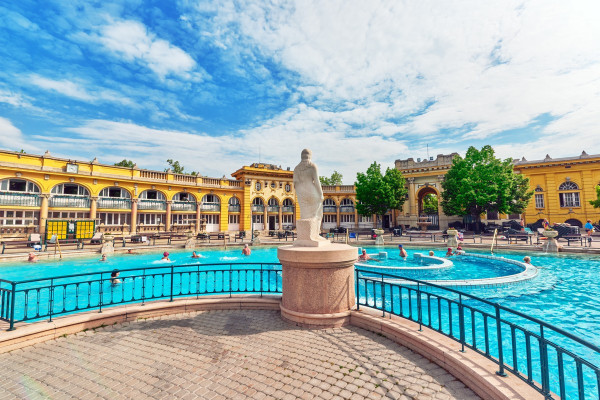
The most famous are the Széchenyi Baths in City Park — a vast neo-Baroque complex with outdoor pools, steam rooms, and an atmosphere that is simultaneously grand and completely informal — and the Gellért Baths on the Buda side, in a beautiful Art Nouveau building whose interior is as worth seeing as anything in the city. A thermal bath visit is not a standard item on a touring programme, but it is one of the things that makes Budapest genuinely different from every other capital in Central Europe.
How People Travel from Prague to Budapest
By private car: approximately five hours on the motorway, with stops where you want them. This is the only option that lets you pause in Vienna, explore the Wachau valley, stop at a vineyard, and arrive at your hotel rather than at a bus terminal. It is the option where the journey itself becomes part of the trip.
By train: direct trains run Prague to Budapest via Vienna in around seven hours. The route is scenic in stretches — the Vltava valley south of Prague, the lower Austrian wine country — but seven hours is a long day, and the train arrives at Keleti station in Pest, which requires a further transfer to wherever you are staying. The train makes sense if Budapest is your only destination and you want to travel independently. It cannot stop at the places along the way.
By bus: RegioJet and FlixBus both serve the Prague–Budapest route in around seven hours. Cheaper than the train, comfortable enough, and with the same limitation: you are on a schedule, arriving at a terminal, and the landscape you pass through stays outside the window.
The practical conclusion is simple. If Budapest is your only destination, the train is reasonable. If you want to see anything between Prague and Budapest — and there is a great deal to see — a private car with a driver is the only option that makes it possible.
What to Add Between Prague and Budapest
Vienna — One Day, Minimum
Vienna is the obvious addition, and also the most rewarding one. The city sits directly on the route south, and adding a night gives you a full day in a capital that is architecturally and culturally distinct from both Prague and Budapest. The Kunsthistorisches Museum has one of the finest collections of old master paintings in the world. The Belvedere holds Klimt's The Kiss and a set of rooms that are themselves the reason to visit. The Naschmarkt — Vienna's permanent outdoor market — is a meal and an afternoon on its own. The Schönbrunn Palace and its gardens, the imperial apartments, the view from the Gloriette across the city: an hour there disappears quickly.
What Vienna adds to a Prague–Budapest journey is contrast. After the compact medieval streets of Prague and before the wide boulevards and Danube drama of Budapest, the imperial scale of the Ringstrasse and the particular Viennese combination of formality and café ease gives the trip a middle chapter it would otherwise lack.
Bratislava — Two Hours Off the Motorway
The Slovak capital sits directly on the motorway between Vienna and Budapest, and the old town is compact enough to cover well in two hours: a medieval castle above the Danube, a well-preserved historic centre with good cafés and the particular atmosphere of a small European capital that does not yet have the tourism of its neighbours. For groups that want to see four countries in one trip, Bratislava makes a natural stop between Vienna and Budapest.
The Wachau Valley
The stretch of the Danube between Melk and Krems in lower Austria — the Wachau — is one of the finest river landscapes in Central Europe: terraced vineyards on steep slopes, apricot orchards, medieval villages, and Melk Abbey on its promontory above the water. A detour through the Wachau adds two to three hours to the drive and is something that the train and bus cannot offer at all.
Every private tour we plan is different. Some groups spend two days in Prague before heading south. Some start in Budapest and travel north. Some add three days in Vienna. We discuss the itinerary with you before the tour and plan around what interests your group — not around a fixed programme designed for strangers.
Frequently Asked Questions
Is Budapest worth visiting from Prague?
Yes — Budapest is one of the most rewarding cities in Central Europe and genuinely different from Prague in atmosphere, architecture, and culture. The Danube, the castle, the Parliament building, the thermal baths, and the ruin bars together make for a city that takes at least two full days to see properly. The question is not whether it is worth visiting, but whether you have enough time to do it justice.
Can you do Budapest as a day trip from Prague?
Not realistically. The distance is 530 km and the drive takes about five hours each way. A same-day return would mean roughly ten hours of travel for two or three hours in the city — which is not a good use of time for either destination. Budapest requires at least one overnight stay, and ideally two or three days.
How long does it take to get from Prague to Budapest by car?
Approximately five hours on the motorway, not including stops. The route goes south through Brno, then into Austria via Bratislava or Vienna, and into Hungary. With a stop in Vienna or Bratislava, the journey typically takes a full day.
What is the best way to travel from Prague to Budapest?
By private car if you want flexibility and the ability to stop along the way. By train (via Vienna, approximately seven hours) if you want a fixed schedule and are travelling independently. A private car is the only option that lets you visit Vienna, the Wachau valley, or Bratislava en route.
Should I add Vienna between Prague and Budapest?
Yes, if you have the time. Vienna sits almost exactly on the route between Prague and Budapest, and adding one night adds very little to the total travel time while giving you a full day in a third European capital. Prague, Vienna, and Budapest together make one of the most satisfying multi-city journeys in Central Europe.
How many days do I need for a Prague–Vienna–Budapest trip?
A minimum of seven days gives you two days in Prague, one day in Vienna, and two days in Budapest, with travel days between them. Ten to eleven days is more comfortable and allows for optional stops along the way — the Wachau valley, Bratislava, or the Czech countryside south of Prague.
What language does the guide speak on your Prague–Budapest tour?
Our guides are English-speaking. Italian, German, and Russian-speaking guides are available on request — contact us when enquiring about the tour and we will confirm availability for your dates.
Practical Information
Distance Prague to Budapest: approximately 530 km · 5 hours by car on the motorway.
Duration: the journey from Prague to Budapest takes approximately 5 hours by car. Most groups spend 2–3 days in Budapest, with optional stops along the way. The programme is planned individually around your schedule.
Group size: private throughout — you do not share the car or guide with other groups. We accommodate couples, families, and groups up to 10 persons.
Languages: English-speaking guide throughout. Italian, German, and Russian-speaking guides available on request.
What is included: private car and licensed guide, hotel-to-hotel transfers, all transport. Hotels, entrance fees to museums, and meals are arranged separately according to your preferences and budget.
Price: calculated individually depending on group size, number of days, and programme. Contact us for a quote — no deposit required to hold your dates.
Payment: no deposit required to confirm the tour. We invoice after finalising the programme together.
Cancellation: free up to 48 hours before the start of the tour.
Currency: three countries, three currencies. Czech Republic uses the koruna (CZK), Austria uses the euro (EUR), Hungary uses the forint (HUF). Budapest is card-friendly for most tourist spending, though local markets and smaller restaurants often prefer cash. Carry some forints for smaller purchases and public toilets. ATMs are widely available throughout Budapest.