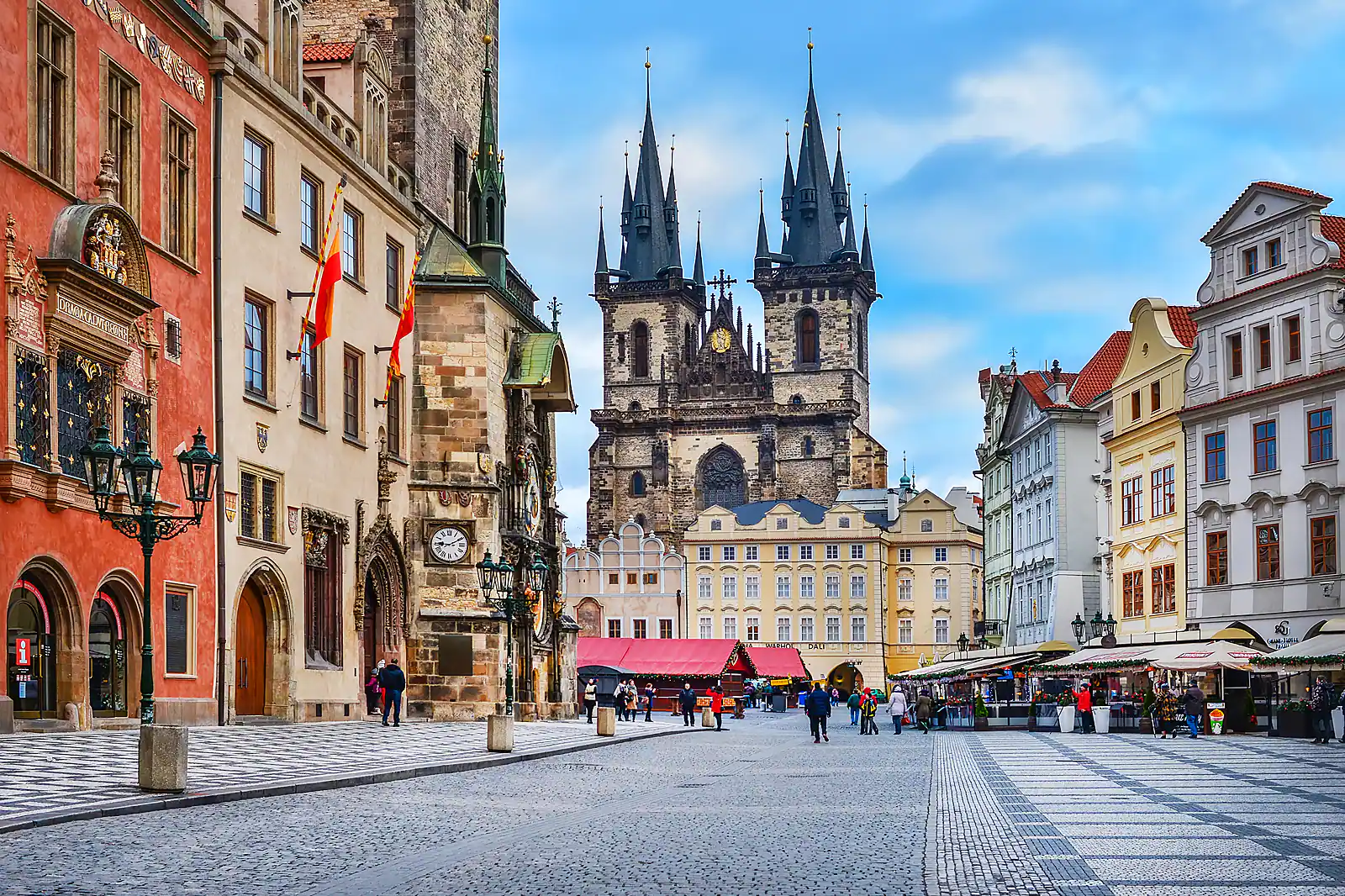

Prague's Jewish Quarter — Josefov — is one of the most historically significant neighbourhoods in Central Europe. Enclosed between the Old Town Square and the river, it holds six synagogues, the oldest surviving Jewish cemetery in Europe, and eight centuries of unbroken Jewish life in a space you can walk across in ten minutes. More people have heard of it than have understood it. A private guide changes that.

Most visitors to Josefov walk through quickly, photograph the facades, and leave without knowing what they are looking at. The neighbourhood has no shortage of signs and audio guides. What it does not have, without a specialist, is context — the thread that connects a 12th-century cemetery to a 20th-century genocide to the neighbourhood you are standing in today.
What You See in Josefov
The Jewish Quarter is compact but dense. Every building carries a history, and many of the most important ones are unmarked from the outside. A private guide determines what you actually encounter rather than what happens to be signposted.
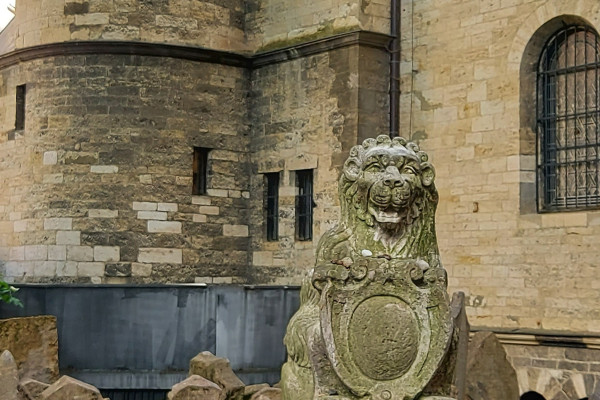
The Old Jewish Cemetery
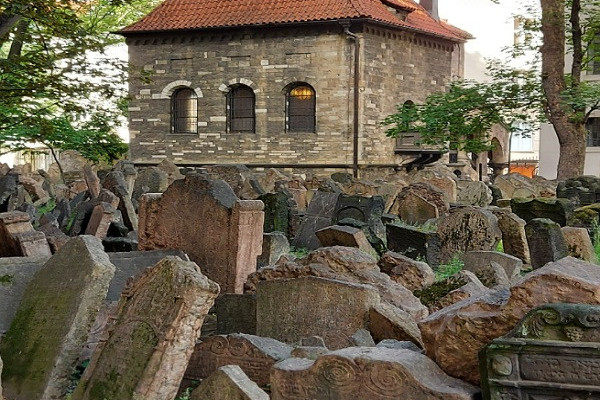
The Old Jewish Cemetery is the oldest surviving Jewish burial ground in Europe, in continuous use from the early 15th century until 1787. Because Jews were forbidden to bury their dead elsewhere in the city, the cemetery accumulated layers — some estimates suggest up to twelve thousand tombstones mark over one hundred thousand burials in a space that covers barely a quarter of a hectare. The stones lean against each other, some nearly horizontal with age, in a density that is unlike any other burial ground in the world.
The effect is overwhelming in a way that photographs do not prepare you for. The most famous grave belongs to Rabbi Judah Loew ben Bezalel — the Maharal — the 16th-century scholar associated with the legend of the Golem, the clay figure said to have been created to protect the Jewish community of Prague. Stones and small notes are still left on his grave every day.
The Pinkas Synagogue
The Pinkas Synagogue is the most emotionally direct place in Josefov. Its walls are inscribed with the names of 77,297 Bohemian and Moravian Jews murdered during the Holocaust — arranged alphabetically by town of origin, with each person's name, birth year, and year of death. The inscription was completed in 1959, destroyed during the Communist period on the pretext of damp, and painstakingly restored after 1989. Upstairs, drawings made by children in the Terezín concentration camp are on permanent display.
It is not a large building. It takes some time to understand what you are looking at.
The Old-New Synagogue
The Old-New Synagogue was built around 1270 and is the oldest surviving synagogue in Europe. It is still a functioning place of worship. The Gothic architecture — the ribbed vaulting, the narrow windows, the worn stone — is the original structure, not a restoration. According to legend, the attic holds the remains of the Golem created by Rabbi Loew, sealed there after it was deactivated, and never removed.
The Spanish Synagogue
The Spanish Synagogue is the newest in Josefov, built in 1868 in Moorish Revival style. The interior is extraordinary: every surface is covered in geometric ornament in gold, red, and blue, modelled on the Alhambra in Granada. It houses a permanent exhibition on the history of Czech Jews from the Emancipation period to the Second World War. Franz Kafka's father attended this synagogue.
Franz Kafka and Josefov
Franz Kafka was born one street away from Josefov in 1883, and the neighbourhood was the world of his childhood and much of his adult life. His father's shop was on the edge of the Old Town Square. He attended school nearby, worked in an insurance office visible from the quarter's rooftops, and lived with his parents in a series of apartments in and around the area for most of his life.
The Kafka Museum across the river in Malá Strana focuses on his manuscripts. But Josefov itself is where his biography took place — and a guide who knows the quarter can walk you through it in a way no museum can.
Beyond the Quarter: Terezín
Sixty kilometres north of Prague, the town of Terezín was converted by the Nazis in 1941 into a concentration camp and transit ghetto. Over 150,000 Jews were sent through Terezín; nearly 90,000 were transported to Auschwitz and other extermination camps. Approximately 35,000 died in Terezín itself.
The Nazis used Terezín for propaganda purposes, staging a visit by the Red Cross in 1944 and producing a film intended to show the world that Jews were being treated humanely. The deception is itself part of the history — and the Ghetto Museum in Terezín documents it in full.
A private day trip from Prague to Terezín takes four to five hours and is typically combined with the morning in Josefov. It is one of the most visited and most affecting historical sites in the Czech Republic — and one that is very difficult to understand without a guide who knows the full history.
The Czech Jewish History Tour
For those who want to go deeper, we offer a four-day private tour through Czech Jewish heritage — Prague, Terezín, and sites across Bohemia and Moravia that trace eight centuries of Jewish life in the region. This is a specialist itinerary, led by a guide who has dedicated years to this history, and designed for people who want understanding, not just sightseeing.
The four-day tour visits the major Prague sites, a full day at Terezín, the Jewish quarter of Třebíč (a UNESCO World Heritage Site), the preserved synagogues of Mikulov and other Moravian towns, and ends in Brno. It is available as a private tour with full flexibility — each day's itinerary is discussed and adjusted to the group's interests.
Entry to the Jewish Museum in Prague (which covers the Old Jewish Cemetery, Pinkas Synagogue, Spanish Synagogue, and others) is purchased separately on site. Tickets can sell out in high season — your guide will advise on timing. The Old-New Synagogue has a separate admission. Terezín entry is also paid separately.
Practical Information
Duration: half-day (3–4 hours) for the Jewish Quarter in Prague; full day (7–8 hours) if combined with Terezín.
Starting point: hotel pickup in Prague, or meeting point by arrangement in the Old Town.
Language: English. Russian and Ukrainian also available.
Price: from €150 per group for the Prague Jewish Quarter; Terezín combination from €300 per group (up to 5 persons). The four-day Czech Jewish Heritage Tour from €1,200 per person — ask for a detailed programme.
Payment: cash on the day. No prepayment or deposit required.
Cancellation: free cancellation up to 24 hours before the tour.
Frequently Asked Questions
How long does the Jewish Quarter tour take?
The walking tour of Josefov takes 2.5 to 3.5 hours. With Terezín added, plan a full day (7–8 hours including travel time).
Do I need to buy tickets in advance?
Your guide will advise on timing, but in high season (May–September) Jewish Museum tickets can sell out. We recommend arriving early or booking skip-the-line tickets online beforehand. Entry fees are not included in the tour price.
Is the tour suitable for children?
Josefov is suitable for older children (10+) who have some historical context. Terezín deals with difficult Holocaust themes and is better suited to teenagers and adults. We can adapt the level of detail to your group.
What is the difference between the Jewish Quarter tour and the Czech Jewish Heritage Tour?
The Jewish Quarter tour covers Josefov in Prague — typically a half-day. The four-day Czech Jewish Heritage Tour covers Prague, Terezín, and Jewish heritage sites across Bohemia and Moravia, and is designed for those who want a comprehensive understanding of Czech Jewish history.
Can the tour be conducted in Russian or Ukrainian?
Yes. We offer tours in English, Russian, and Ukrainian. Please mention your preferred language when booking.
Is the Terezín extension worth adding?
If you are coming to Prague once and have an interest in Second World War history, yes. Terezín is one of the most important Holocaust sites in Central Europe and cannot be properly understood without a guide who knows its full history — including the Nazi propaganda operation staged there.