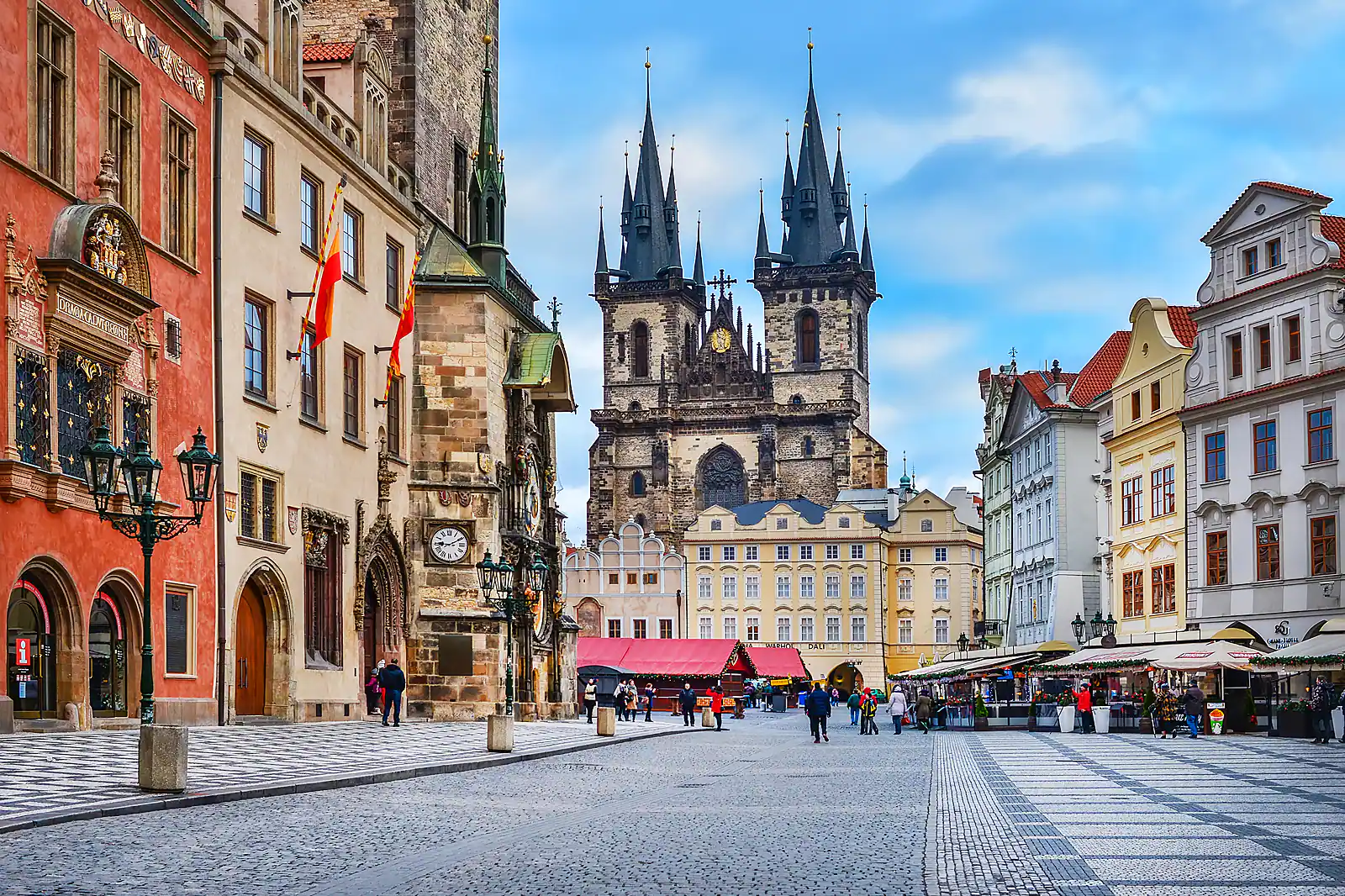
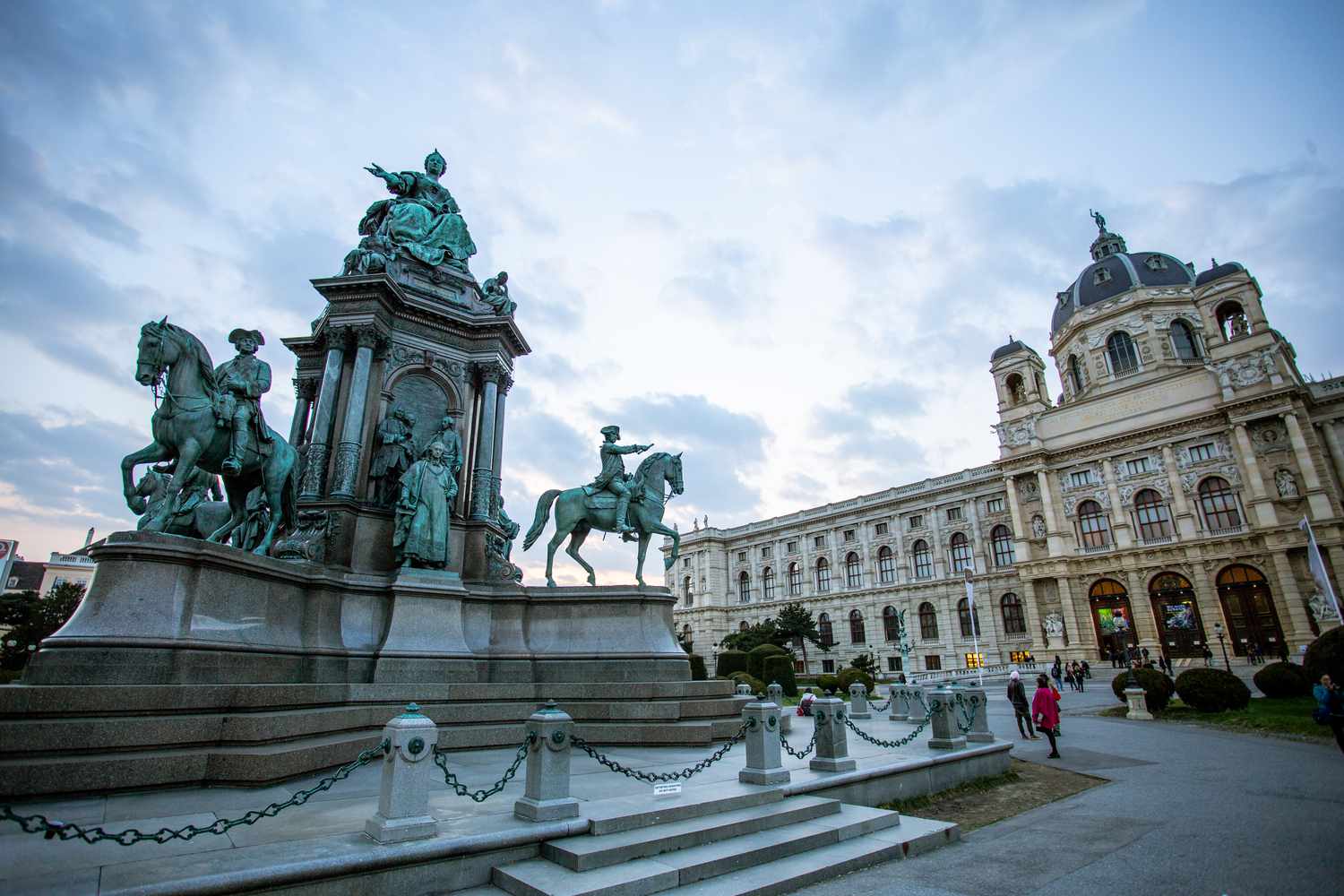
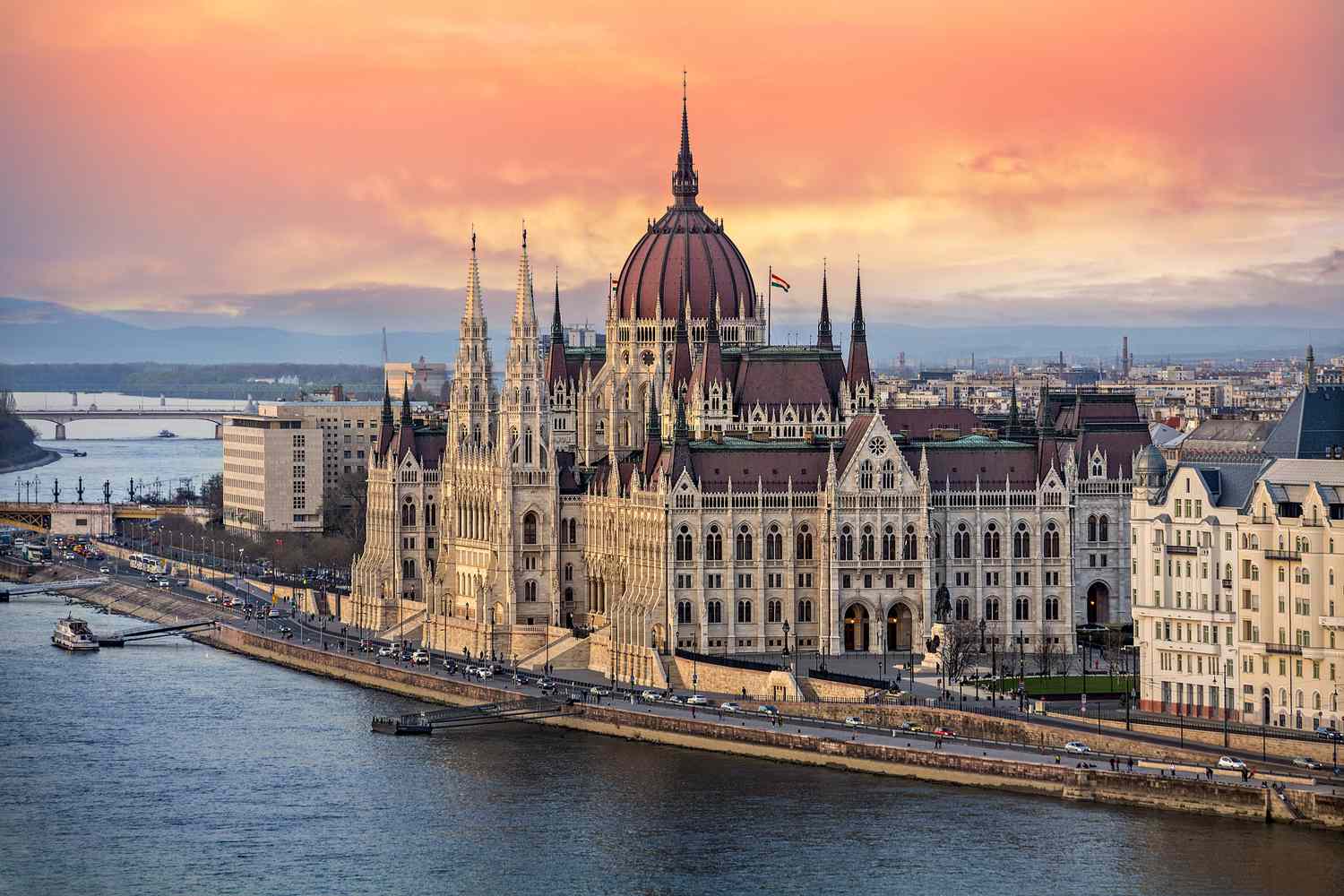


There is a particular kind of Central European trip that leaves people slightly changed — not dramatically, not in a way they can easily explain, but in the way that happens when you spend four days moving through places that have been considered extraordinary for centuries.
Vienna, Salzburg, and Hallstatt form exactly that kind of journey. Three places, three entirely different characters, and a combined weight of history, music, and landscape that very few itineraries in Europe can match.
From Prague, all three are reachable by private car without the exhaustion that comes from booking flights, navigating airports, and losing half a day to transfers. The drive from Prague to Vienna takes roughly three and a half hours. From Vienna, Salzburg is another three. Hallstatt sits an hour and a half south of Salzburg, on the edge of a mountain lake that has been inhabited for seven thousand years.
Four days is the right amount of time — not rushed, not padded, with enough space to actually absorb what you are looking at.

Day 1 — Prague to Vienna
You leave Prague in the morning and arrive in Vienna by early afternoon — enough time to check in to your hotel, shake off the drive, and begin.
Vienna does not ease you in gently. The city announces itself immediately: the Ringstrasse lined with monumental buildings, the spire of St. Stephen's Cathedral visible from half the city, the smell of coffee from a dozen establishments that have been serving it since the nineteenth century.
The private walking tour of the First District takes in the Hofburg Imperial Palace — the winter residence of the Habsburgs, which grew, wing by wing, over six centuries into something too large and too layered to take in at once. Your guide will give it a shape: which parts were built when, what happened in which room, which of the Habsburg stories are worth knowing and which are merely decorative.
From the Hofburg, the route continues to St. Stephen's Cathedral, to the Graben — Vienna's grandest pedestrian street — and past the Vienna State Opera, which was burned to its steel skeleton in 1945 and rebuilt so faithfully that it is now impossible to see the join.
The evening is yours. Vienna has a density of good restaurants, wine bars, and concert halls that rewards wandering. If classical music interests you, a performance at the Opera or the Musikverein — both a short walk from the city centre — is worth arranging in advance. If it does not, the wine bars of the Naschmarkt neighbourhood stay open late and serve Austrian Grüner Veltliner to people who have nowhere else to be.
Day 2 — Vienna to Salzburg

The drive from Vienna to Salzburg takes roughly three hours on the autobahn, passing through flat agricultural land that gradually gathers itself into foothills and then, approaching Salzburg, into the first serious mountains of the Alps.
The city appears below them — red rooftops, a river, a fortress on a cliff — and the effect, especially if you have not been before, is fairly immediate.
Salzburg's Altstadt is a UNESCO World Heritage Site, and it wears the designation lightly. The old town is genuinely beautiful without requiring much effort on your part: Baroque fountains in cobbled squares, the yellow ochre of the Dom, the market stalls on Universitätsplatz.
Mirabell Palace and its gardens are a five-minute walk from the old town — photographed so often that you will recognise them before you arrive, and still find them better in person. Getreidegasse — the main shopping street of the old town — is where Mozart was born, in a house that is now a museum, at number nine.
From the old town, the walk up to Hohensalzburg Fortress takes about twenty minutes on foot, or two minutes by funicular. The fortress has stood in roughly its current form since 1077, and the panorama from the top — the city below, the Salzach river, the Alps in every direction — is one of the better views in Central Europe.
Your guide will explain what you are looking at and, more usefully, what it meant to the archbishops who sat up here for seven centuries watching the city grow beneath them.
The second night is in Salzburg. The city at night, after the day-trippers have left, is considerably quieter and more atmospheric — the right time for a long dinner, a walk along the river, or simply the experience of a great European city when it belongs to the people who live in it.
Day 3 — Hallstatt
Leave Salzburg early. This matters.
Hallstatt is one of the most visited villages in Austria — on a peak summer afternoon, the lakefront is wall to wall with tour groups and selfie sticks, and the atmosphere is closer to a theme park than a thousand-year-old salt-mining village. In the early morning, before nine, it is something else entirely.
The drive south from Salzburg takes about an hour and a half, through the Salzkammergut — the Lake District of Austria, a landscape of green hills, clear water, and the kind of light that makes even passing drivers slow down.
Hallstätter See, the lake Hallstatt sits on, appears suddenly as you come through the mountains: deep blue-green, with the village clustered on a narrow shelf between the cliff and the water, the spire of the evangelical church rising above the rooftops. The classic view — houses mirrored in the lake, mountain behind — is from the ferry landing on the opposite shore. It is every bit as good as in photographs.

Hallstatt has been continuously inhabited since around 5000 BC — one of the oldest continuously occupied settlements in Europe. The salt mines in the mountain above the village are the reason: the largest prehistoric salt mine ever discovered, worked for millennia before the Romans arrived.
The Hallstatt Ossuary — a small bone chapel at the Catholic church, where skulls decorated with names and flowers line the walls — is one of the stranger and more quietly moving things you will see on the trip. It takes about ten minutes and leaves an impression that lasts considerably longer.
By midday, the village is filling up. You return to Salzburg for lunch and an afternoon with no obligations — the Mirabell garden again, a café on the Alter Markt, a walk along the river — before the third and final night in the city.
Day 4 — Return to Prague
The morning drive back to Prague takes roughly four and a half hours, returning through the Czech border and south Bohemia.
If the group wishes, the route can pass through Český Krumlov — the UNESCO-listed town on the Vltava, about ninety minutes from Prague — for a short stop before the final stretch home. Otherwise, Prague by early afternoon, hotel drop-off, and the particular satisfaction of having seen a great deal without having once dealt with an airport.
Practical Tips for This Tour
Carry euro coins — including small ones. Public toilets in Austria charge €0.50–1.00 per visit, usually payable in cash — most often by coin. This applies at motorway service stations, tourist sites, and public facilities in cities. Cards are widely accepted in restaurants and shops, but for toilets it is best to have coins on hand.
Plan shopping for weekdays. Austrian shops — including clothing stores, boutiques, and many food shops — close on Sundays, and hours on Saturdays are often reduced (typically until 17:00–18:00). If shopping is part of the plan, schedule it for Thursday or Friday. The Mariahilfer Strasse in Vienna and the Getreidegasse in Salzburg are the main shopping streets — both open normal hours on weekdays.
Arrive in Hallstatt early. In July and August, Hallstatt sees up to ten thousand visitors per day. Arriving before 09:00 makes an enormous difference to the experience. We build this into the Day 3 itinerary as standard.
Currency. Austria uses the euro. The Czech Republic does not — you will use koruna (CZK) in Prague and switch to euros from Vienna onwards. Your guide can advise on exchange if needed.
Entrance fees. Not included in the tour price: Hofburg Museum and Schönbrunn in Vienna (€14–18 per person), Hohensalzburg Fortress in Salzburg (€15 per person with funicular), Hallstatt Salt Mine (€30+ per person). Your guide will advise on what is worth prioritising for your group.
Private Tour or Train?
Vienna is accessible from Prague by direct train in around four hours — comfortable, reliable, reasonable. The train is a sensible option if Vienna is your only destination and you prefer to travel independently.
It becomes less sensible when you add Salzburg and Hallstatt. There is no direct train from Prague to Salzburg; you change in Vienna, and the Salzburg–Hallstatt connection requires a further change at Attnang-Puchheim. The logistics are manageable, but they add time and complexity, and they leave you entirely on your own when something runs late.
A private tour costs more than train tickets. What you get in return: door-to-door service from your Prague hotel, a guide who knows each destination and adapts to your group's pace, the flexibility to linger in Hallstatt when the light is right and leave Salzburg when you are satisfied — rather than when a train says so.
For a couple, the cost per person is roughly comparable to first-class rail plus three nights of accommodation. For a family or group of four, a private tour typically costs less per person than the equivalent first-class tickets — and considerably more in terms of what you actually experience.
Frequently Asked Questions
How far is Vienna from Prague by car?
Vienna is approximately 330 kilometres from Prague, and the drive takes around 3.5 hours on the motorway. We depart in the morning to arrive in Vienna with time for a full afternoon walking tour.
Is Hallstatt worth visiting on a 4-day tour from Prague?
Yes — and the key is timing. We visit Hallstatt early on Day 3, before the tour buses arrive. Early morning in Hallstatt is one of the most memorable experiences in Central Europe. By midday the village is crowded; by 09:00 it is still quiet and extraordinary.
Do I need a visa for Austria?
Austria is in the Schengen Area, the same zone as the Czech Republic. If you hold a valid Schengen visa or are travelling on an EU/EEA passport, no additional visa is required. Non-EU travellers who require a Schengen visa for the Czech Republic are already covered for Austria on the same document.
Are hotels included in the tour price?
No — accommodation is booked independently by the client. The tour price covers the private car, licensed guide for four days, and all transport throughout the route. We are happy to recommend hotels in Vienna and Salzburg to suit your budget and preferences.
Can the tour be done in summer and autumn?
Yes. Summer (June–August) offers the best weather and the longest days, but Hallstatt and Salzburg are at peak crowds. September and October are excellent: cooler temperatures, fewer visitors, beautiful autumn colour in the Salzkammergut. Both seasons are well suited to this itinerary.
Can we add Schönbrunn Palace or the Vienna Woods?
Yes, with some adjustment to the Day 1 schedule. Schönbrunn is about 20 minutes from the city centre and very much worth seeing if Vienna is new to you. Let us know your priorities when you enquire and we will build the day around them.
What languages does the guide speak?
English, Russian, and Ukrainian. Please indicate your preferred language when booking.