

Vienna is 330 kilometres from Prague. By private car, that is three and a half hours of motorway driving through south Bohemia and lower Austria — no border delays, no layovers, no airports. The question most people ask before they go is whether one day is enough.
The honest answer: one day in Vienna is better than no days in Vienna. But Vienna is not a city that gives itself up quickly. It rewards time. The coffee houses, the galleries, the palaces, the particular atmosphere of an imperial capital that has been taking itself seriously for eight centuries — these things reveal themselves slowly, and a rush through the First District between noon and six in the evening will leave you feeling as though you have seen the covers of a very good book without reading any of the pages.
Here is everything you need to know about getting from Prague to Vienna, what to see when you arrive, and how to make the most of however much time you have.

How Far is Vienna from Prague?
Prague to Vienna is approximately 330 kilometres by road, following the D1 motorway south from Prague and crossing into Austria near Brno. The drive takes three to three and a half hours in normal traffic conditions — slightly longer during Czech public holidays, when the D1 south of Prague becomes congested.
By direct train, the journey takes approximately four hours from Prague's main station to Vienna Hauptbahnhof. The trains are comfortable and run several times daily.
By bus (Flixbus, RegioJet), the journey takes four and a half to five hours. This is the cheapest option and the least suitable for a day trip, since it limits your time in Vienna to four or five hours at most.
Getting from Prague to Vienna: Private Car vs. Train
If you are travelling with a family or a group of three or more, a private car is the most practical option in both comfort and cost. You leave from your hotel door in Prague and arrive at your hotel or first stop in Vienna — no taxis, no luggage through a train station, no fixed departure time.
The train is a good option for solo travellers or couples who are comfortable navigating a new city independently and do not mind the fixed schedule. Vienna's public transport — the U-Bahn in particular — is excellent, and it is perfectly possible to reach the main sights from the Hauptbahnhof without a car.
Where a private car with a guide adds most value is in what happens between destinations: the context, the stories, the ability to slow down at the things that interest your group and move quickly past the things that do not. In a city as layered as Vienna, that context is most of the experience.
What to See in Vienna in One Day
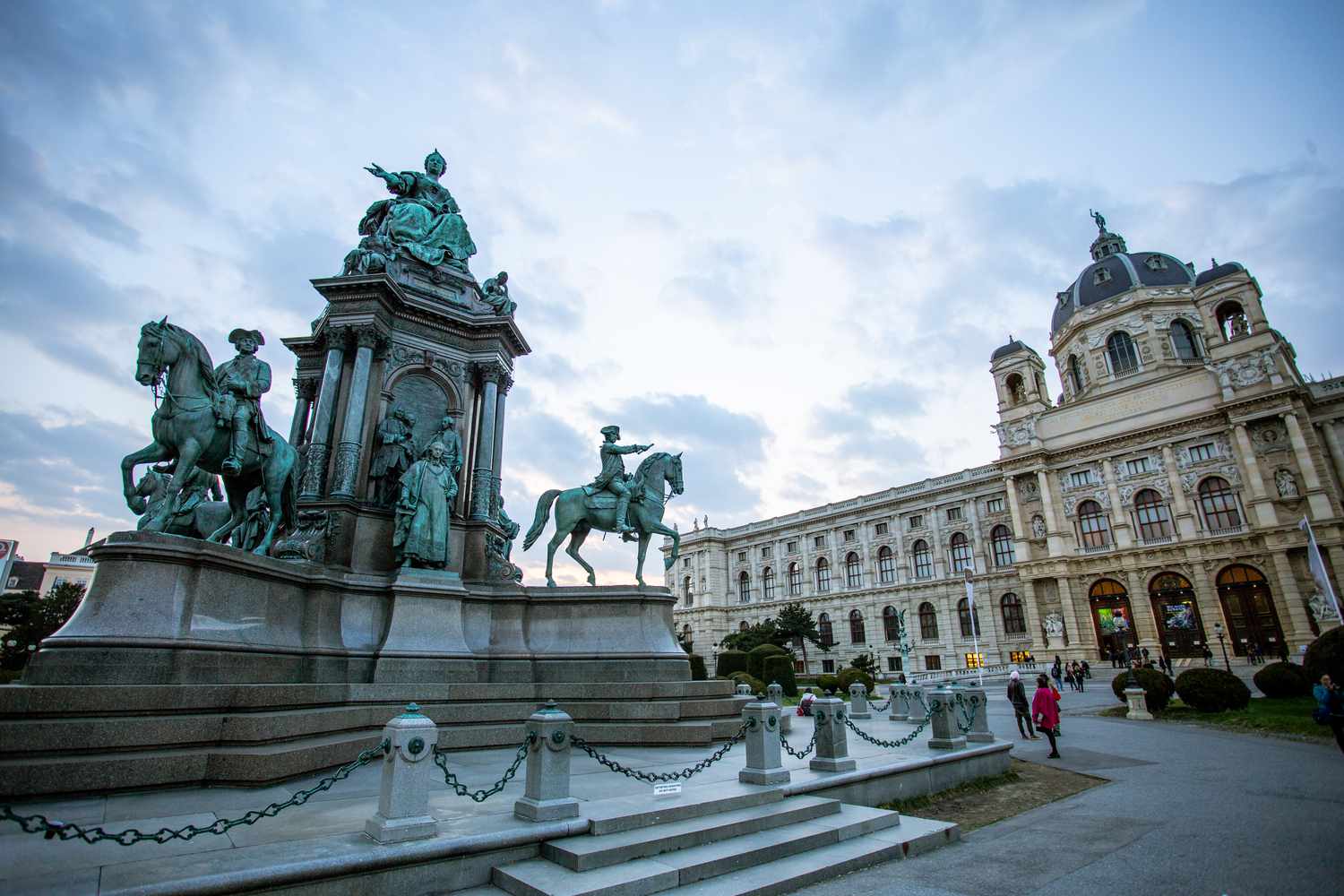
Vienna's main sights are concentrated in and around the First District — the old city, enclosed by the Ringstrasse — and can be covered on foot in four to six hours at a comfortable pace. These are the essential stops:
The Hofburg Imperial Palace is the most important single building in Vienna. It was the winter residence of the Habsburg dynasty for over six centuries, and it grew, wing by wing and decade by decade, into something vast and slightly overwhelming — more than 2,600 rooms, 19 courtyards, 18 wings. You do not need to go inside every museum; the exterior, the courtyards, and the Spanish Riding School entrance are worth an hour on their own.
St. Stephen's Cathedral — the Stephansdom — is the centrepiece of the old city and one of the finest Gothic cathedrals in Central Europe. The mosaic roof alone, with its Habsburg double-eagle picked out in coloured tiles, is worth pausing to look at properly. The interior is free to enter; the catacombs and the south tower require a ticket.
The Graben and Kohlmarkt form the main pedestrian axis of the old city — two streets that run from the cathedral toward the Hofburg, lined with baroque plague columns, luxury shops, and the kind of architecture that makes it clear Vienna has been spending money on its streets for a very long time.
The Vienna State Opera stands at the corner of the Ringstrasse and the Opernring. It was built in the 1860s, gutted by fire in 1945, and rebuilt to the original plans by 1955. The exterior can be seen in passing; guided tours of the interior run throughout the day.
The Belvedere — if time allows — is a short walk or tram ride from the old city. The Upper Belvedere houses Klimt's The Kiss, one of the most reproduced paintings in the world, which is considerably more affecting in person than in reproduction.

A Suggested One-Day Route in Vienna
If you arrive in Vienna at noon and need to leave by seven in the evening, here is a realistic itinerary:
12:00 — Arrive, check in or drop luggage at the hotel. Walk to the First District.
12:30 — Lunch at a Viennese Gasthaus or café near the Naschmarkt.
14:00 — Walking tour: Hofburg courtyard, Spanish Riding School exterior, Heldenplatz.
15:00 — St. Stephen's Cathedral. Climb the south tower for views over the city (20 minutes).
15:45 — The Graben and Kohlmarkt. Coffee at Café Central or Demel — both are institutions worth the detour.
17:00 — Opera House exterior. Walk along the Ringstrasse.
18:00 — Return to car or hotel. Departure for Prague.
21:30 — Back in Prague.
That is a full afternoon and a genuine impression of Vienna. It is not enough to understand the city. But it is enough to want to return — which is, in its own way, a successful day trip.
Is One Day in Vienna Enough?
For the exteriors, the atmosphere, and the broad shape of the city — yes. For the Kunsthistorisches Museum, the Belvedere, Schönbrunn Palace, the Spanish Riding School, the Vienna Woods, a concert at the Opera, and the particular experience of sitting in a Viennese coffee house for long enough that a waiter brings you a glass of water without being asked — no.
Two days gives you enough time to move at a human pace. Three or four days — combining Vienna with Salzburg and Hallstatt — transforms a city visit into a proper journey through Austria. The drive from Vienna to Salzburg is three hours. Hallstatt is ninety minutes south of Salzburg. These three places form a natural four-day itinerary that most people who have done it describe as one of the best trips they have taken.
Practical Tips for Visiting Vienna from Prague
Currency. Austria uses the euro. The Czech Republic uses the koruna. Bring euros from Prague or withdraw from an ATM in Vienna — exchange offices at the station charge high fees.
Carry coins for toilets. Public toilets in Vienna and along the motorway charge €0.50–1.00, usually payable in cash — most often by coin. Have a handful of small euro coins ready, especially at motorway service stations.
Shops close on Sundays. Austrian retail shops — including clothing stores, department stores, and most boutiques — are closed on Sundays. Saturday hours are often shortened (until 17:00–18:00). If shopping is on the agenda, come on a weekday. The Mariahilfer Strasse is Vienna's main shopping street and is fully open Monday to Friday.
Museum tickets. Most major museums in Vienna charge €14–18 per person. If you plan to visit several, the Vienna City Card includes public transport plus discounts. For a private tour, your guide will advise on which tickets are worth buying for your specific interests.
Coffee house etiquette. Viennese coffee houses are not cafés in the modern sense. You are expected to sit as long as you like; the waiter will not hurry you. Order coffee and something from the menu, and the table is yours for the afternoon. This is considered completely normal.
Vienna as Part of a Longer Tour
Most travellers who visit Vienna from Prague find that one day opens rather than closes the question. Salzburg is three hours further by car — compact, Baroque, and entirely different in character. Hallstatt, another ninety minutes south of Salzburg, is one of the most photographed places in Europe for good reason.
We offer a four-day private tour from Prague covering Vienna, Salzburg, and Hallstatt — departing Monday or any day of the week, with hotels booked independently, all transport and guiding included. It is the version of this trip that people tend to talk about afterwards.
Frequently Asked Questions
Can you do a day trip from Prague to Vienna?
Yes. Vienna is 330 kilometres from Prague and roughly 3.5 hours by private car. If you leave Prague at 8:00, you arrive in Vienna by 11:30 — enough time for five to six hours of sightseeing before the return drive. It is a long day, but a manageable one.
How do you get from Prague to Vienna?
The main options are private car (3.5 hours, door-to-door), direct train (4 hours, Prague main station to Vienna Hauptbahnhof), or bus (4.5–5 hours, cheapest but slowest). For a day trip with a group, a private car is by far the most practical.
Is Vienna worth visiting for one day?
Yes — especially the First District: the Hofburg, St. Stephen's Cathedral, the Graben, and the Opera House can all be covered in a half-day walking tour. One day gives you a strong sense of the city. Two days or more lets you go deeper into the museums, the coffee house culture, and the outlying palaces.
What is the best time of year to visit Vienna from Prague?
Spring (April–May) and early autumn (September–October) are the best months — mild weather, manageable crowds, and no extreme heat. December is beautiful if you want the Christmas markets. July and August are the busiest and hottest months; popular sites fill up by mid-morning.
Do I need a visa to travel from Prague to Vienna?
Both the Czech Republic and Austria are in the Schengen Area. EU and EEA citizens need only a national ID card. Non-EU travellers with a valid Schengen visa for the Czech Republic are already covered for Austria on the same document.
Can you combine Vienna with Salzburg and Hallstatt?
Yes — and this is the trip most people wish they had done instead of the day trip. Vienna to Salzburg is three hours by car. Salzburg to Hallstatt is another ninety minutes. A four-day private tour from Prague covers all three destinations at a comfortable pace. See our Vienna, Salzburg & Hallstatt tour for details.